THE HOOPS
Iron, not glue
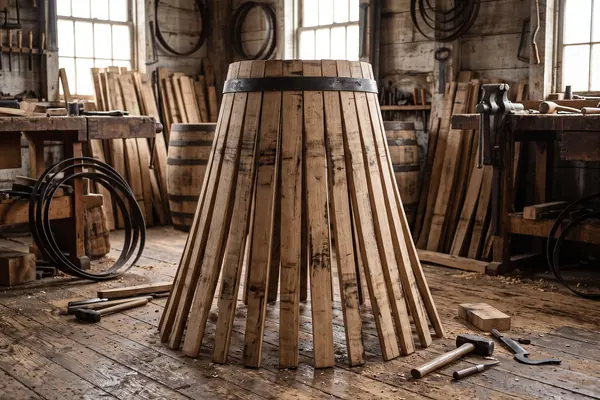
Casks are made with no glue or sealants and hardly any measurements. Iron hoops pull the staves so tight that the seams need no lining.
How a cask is made doodlehoop
NO GLUEjust wood and iron
Shaped oak staves are pulled tight by hoops until the joints close and the cask holds liquid. It is one of the oldest crafts in Britain, and for beer casks one of the rarest.
Updated
THE SHORT ANSWER
A cask is a ring of staves under pressure.
The hoops keep that pressure on.
THE HOOPS
Casks are made with no glue or sealants and hardly any measurements. Iron hoops pull the staves so tight that the seams need no lining.
How a cask is madeTHE SIZES
To a cooper, “barrel” is a particular size of cask: 36 imperial gallons. A firkin holds 9 gallons and a hogshead 54.
Compare the sizesTHE CRAFT
Heritage Crafts lists beer, cider and wine coopering as endangered, with 5 full-time professionals. Making spirit casks is rated currently viable.
See the numbersA QUICK CASK CHECK
Pick a traditional English cask name to see its size. The bar shows how big it is compared with the others.
Imperial sizes, fixed when the UK adopted the imperial gallon in 1824. One imperial gallon is 8 pints.
TWO NUMBERS WORTH KNOWING
Beer casks gave way to metal kegs.
Whisky still has to sit in oak.
5
Coopers earning their main income
The Heritage Crafts Red List rates non-spirits coopering as endangered, with 5 professionals, 1 more part-time and 1 apprentice (National Cooperage Federation survey, 2021).
BEER, CIDER, WINE · HERITAGE CRAFTS
118
Apprentices training in 2025
Spirit-cask coopering is rated currently viable, with 202 time-served coopers and 118 apprentices in their four-year apprenticeship in 2025.
SPIRITS · HERITAGE CRAFTS
The Museum of English Rural Life notes that by 2010 only 4 English breweries still employed a qualified cooper. Scotch whisky must, by law, be matured in oak casks for at least three years.
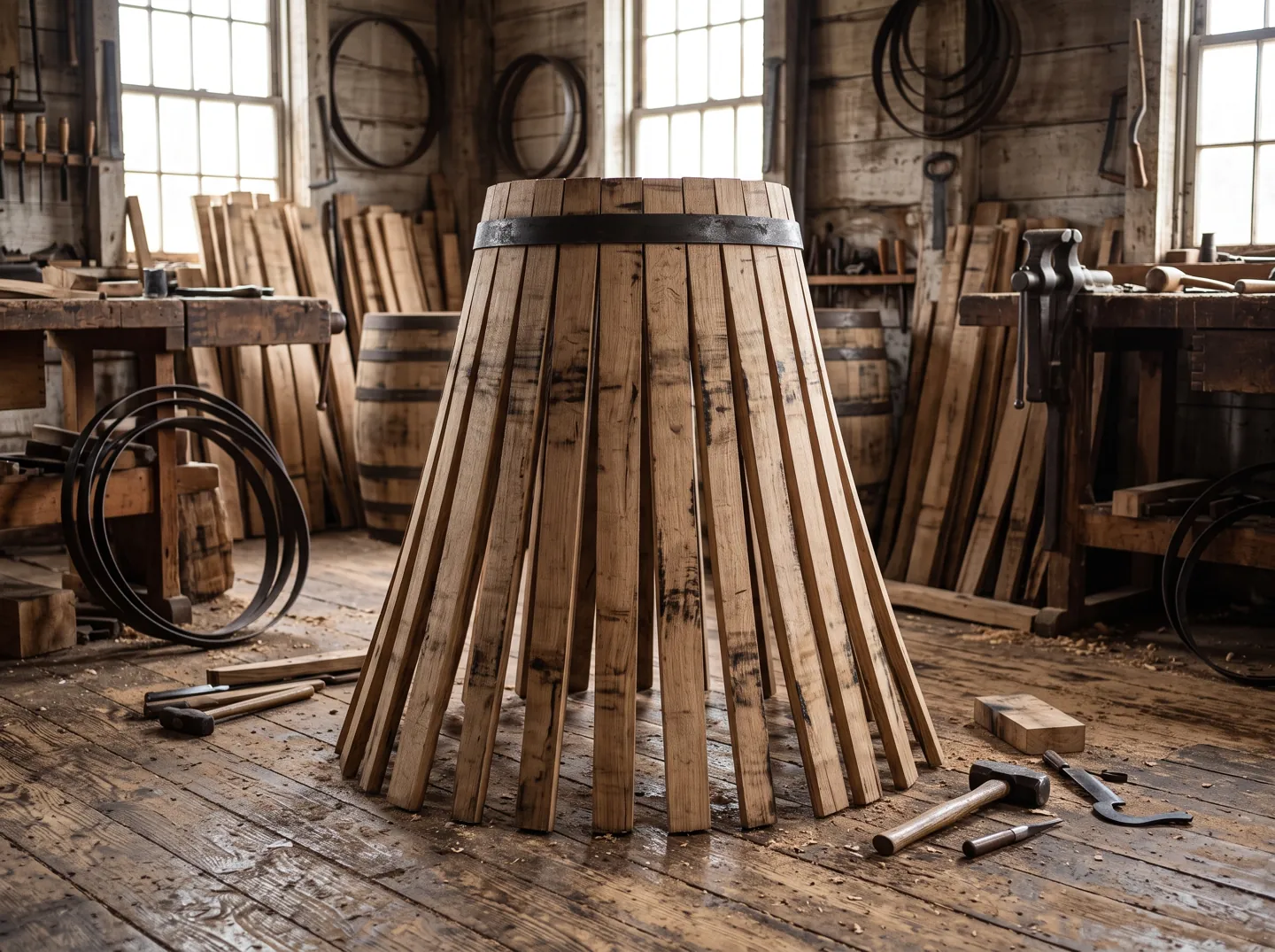
FOUR STAGES OF A CASK
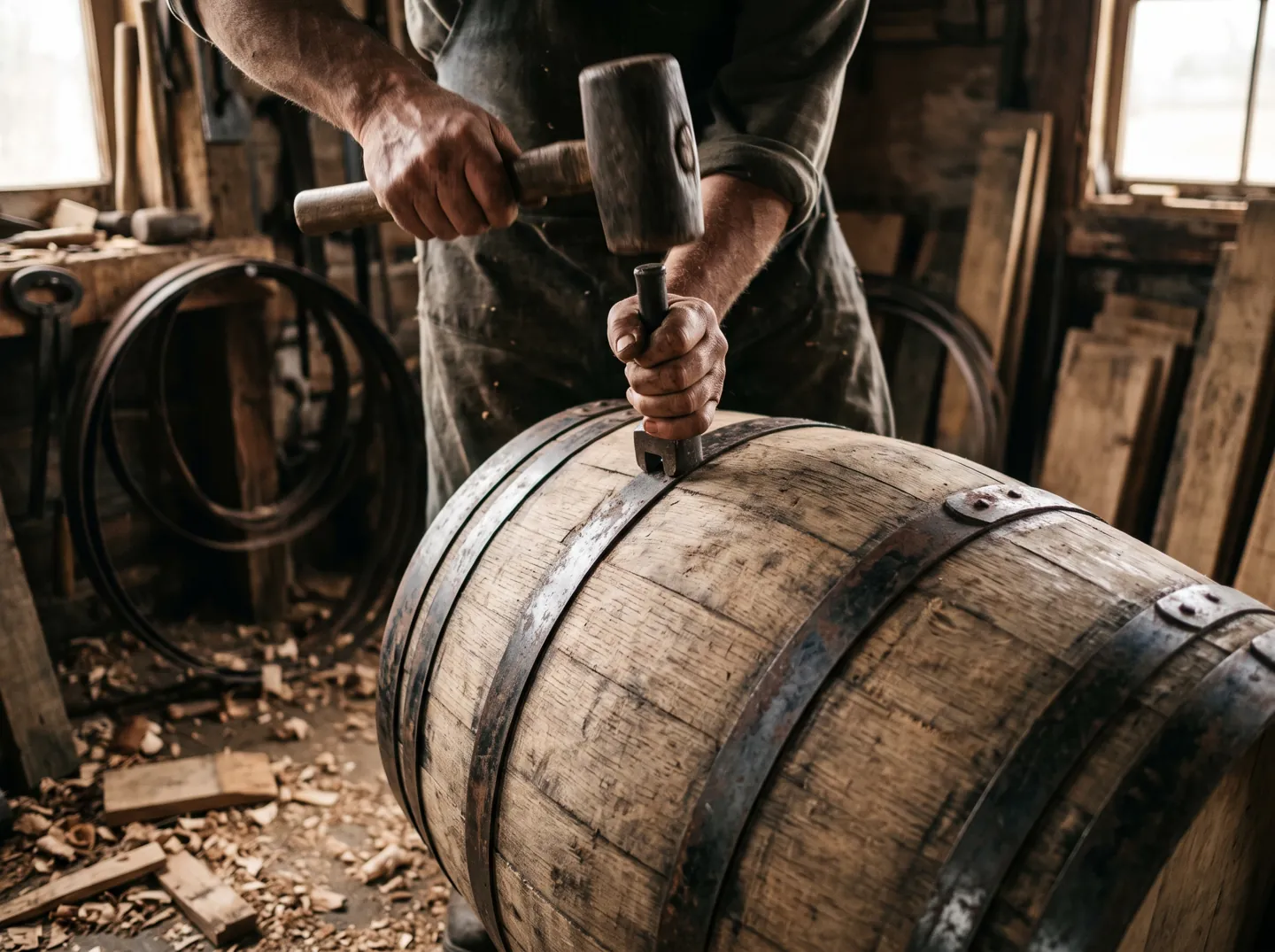
Some coopers still work with tools that are centuries old. The skill is in the eye and the hands, not in measuring.
Each stave is shaped so its edges meet the next. A beer cooper describes jointing staves to within two thousandths of an inch, by eye.
In coopering it is the wood, not the metal, that is made supple by heat, so the staves can be drawn in.
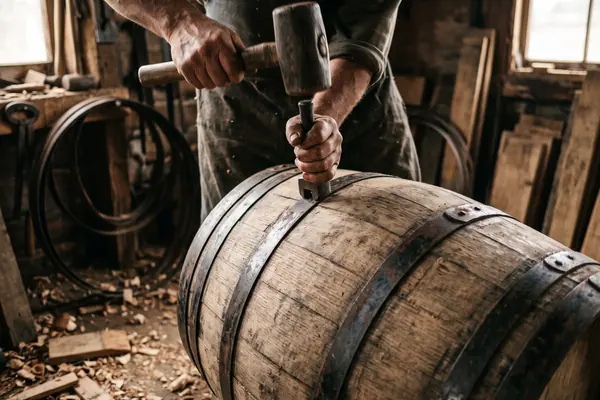
Iron hoops are hammered on around the curved staves. As they tighten, the joints close until the cask holds liquid.
A planing tool called a croze cuts a groove inside the mouth of the cask, where the flat end is fitted.
WHY BEER CASKS ARE HARDER
Coopering split into three branches: dry (for goods that are not liquid), white (household tubs and buckets) and wet, the most skilled. Wet casks for beer must also withstand the pressure of fermenting beer, put at 30 to 40 pounds per square inch.
Wooden casks were phased out of the larger breweries between the 1950s and the 1970s, as metal and plastic kegs took over. The skills carry over to spirit casks, and Heritage Crafts hopes demand for wine casks may grow as English wine gains a foothold.
Questions
Not to a cooper. “Cask” is the general word, and a barrel is one size of cask: 36 imperial gallons, or two kilderkins.
The staves are shaped so their edges meet closely, and the iron hoops pull them so tight that the seams need no lining. Casks are made without glue or sealants.
UK apprenticeships, overseen by the National Cooperage Federation, last four years. Traditionally you only become a master cooper once you have trained an apprentice yourself.
Heritage Crafts gives its origin in the UK as the 1st century AD, and tradition links its arrival with the Romans.
Scotch whisky must, under the Scotch Whisky Regulations 2009, be matured only in oak casks of no more than 700 litres, for at least three years, in Scotland.
ABOUT THIS NAME
doodlehoop.com is part of the DoodleSale portfolio. It isn't in an auction right now, but you can ask about leasing it.